

Premature Babies and Developmental Delays
It is a myth that all premature babies will have developmental delays.
While not all premature babies experience complications, being born too early can cause short-term and long-term health problems. Generally, the earlier a baby is born, the higher the risk of complications. Birth weight plays an important role, too. Some problems may be apparent at birth, while others may not develop until later.
Extremely premature, low birth weight and sick babies have a higher risk of development problems – but even in these cases, many babies develop normally. It is therefore important to distinguish between delays due to prematurity or possible birth or neonatal care injuries.
Birth weight and Gestational age
- Most pregnancies have an average of 40 weeks gestation (full term).
- Birth before 37 weeks gestation is considered premature.
- Late preterm, born between 34 and 36 completed weeks of pregnancy.
- Moderately preterm, born between 32 and 34 weeks of pregnancy.
- Very preterm, born at less than 32 weeks of pregnancy.
- Extremely preterm, born at or before 25 weeks of pregnancy.
- Extremely premature babies are at a higher risk of developmental problems. It is possible for babies born at 23 to 24 weeks to survive, but it is risky as they require neonatal care.
- An extremely low birth weight (ELBW) infant is defined as one with a birth weight of less than 1000 g. Most extremely low birth weight infants are also the youngest of premature newborns, usually born at 27 weeks’ gestational age or younger.
- Infants born with a birth weight of less than 1500 g are defined as very low birth weight (VLBW) infants.
- Low birth weight is defined by birth weight of less than 2500 g.
For more info:
- Click here to read more on “Premature Baby”
- Click here to read more on “Extremely Low Birth Weight Infant”
- Click here to read more on “Very Low and Extremely Low Birthweight Infants”
Screening for health and developmental conditions
In fact, most premature infants have normal development. That is why “screening” is a very essential step for doctors to detect the early complications, not just in preterm, but also in full-term newborns. There are few screening tests that must be taken by newborns, such as respiratory and digestive system screening, retinopathy of prematurity (ROP) screening, OAE or hearing screening, and lastly neonatal cranial ultrasound screening.
Special care
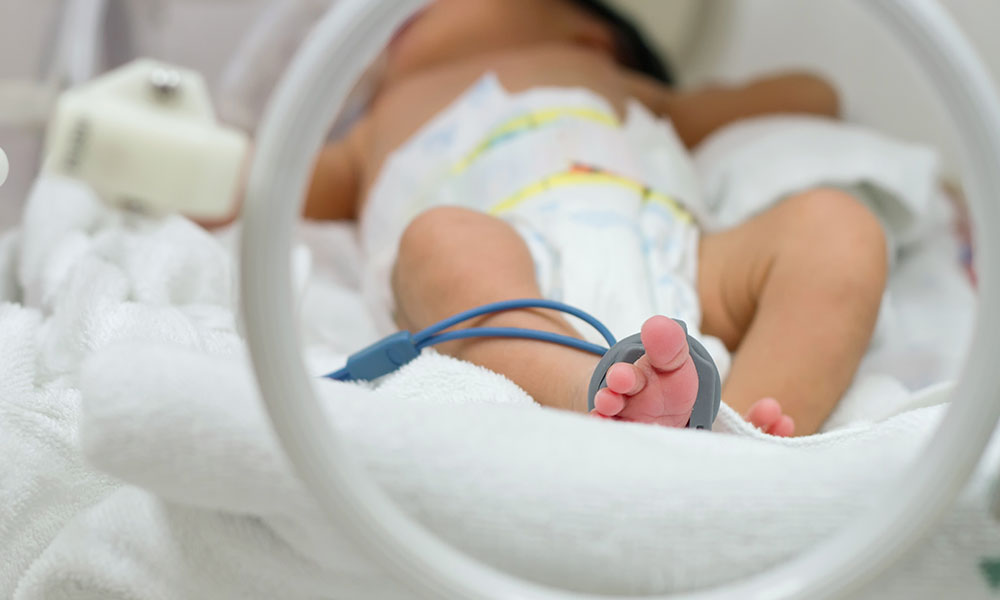
If you deliver a preterm baby, your baby will likely need a longer hospital stay in a special nursery unit at the hospital. Depending on how much care your baby requires, he or she may be admitted to an intermediate care nursery or the neonatal intensive care unit (NICU). Doctors such as neonatologists and pediatricians together with a specialized team of nurses with training in taking care of premature babies will be available to help care for your baby. Don’t hesitate to ask questions.
Your baby may need extra help feeding, and adapting immediately after delivery. Your health care team should help you understand what is needed and what your baby’s care plan will be. This should include advice and assistance with information on necessary tests, medication, and treatment. If you suspect and developmental delays, your pediatrician can help you diagnose and treat those concerns.
Click here for more information on “Premature awareness myths and facts”