

Frequently asked questions: My child has a club foot. Can I claim for this?
“My little girl is 1 and ½ years old and her left foot is deformed. The doctor has explained that it is a clubfoot and they have done operations already, but she still needs special shoes and her foot has scars. She had a drip and a plaster cast on her foot and there is a scar. Can I claim for negligence?” – Christine
This is a question which we receive often. The most important factor in giving advice in such cases is a diagnosis and opinion by a specialist doctor. The specialist will be able to advise whether the disfigurement or disability was due to genetic causes (born this way) or whether it was due to any drips, plaster casts, treatments or operations that were done after birth.
Knowing whether the cause is negligent or congenital (genetic)
In the example at the beginning of the article, Christine’s doctor had given her specific advice that her child’s foot is deformed due to a genetic condition called “clubfoot”. Some deformities are due to congenital or genetic reasons, while some can have operations or injuries as a cause.
It is important to make a distinction on which conditions are present at birth (congenital) and which could be caused later. We’ll firstly discuss what a clubfoot is, together with how it is treated and secondly we’ll give some examples of cases where babies are not born with clubfoot and deformities are due to treatment.
If you are uncertain whether your child was born with a deformity or whether it was the result of negligent care, it is best to contact an attorney for advice. You can contact our offices for a free telephonic consultation or send an e-mail if you would like advice.
You can reach us at Paul du Plessis Attorneys at paul@pauldup.co.za or 012 809 1588.
What is a clubfoot?
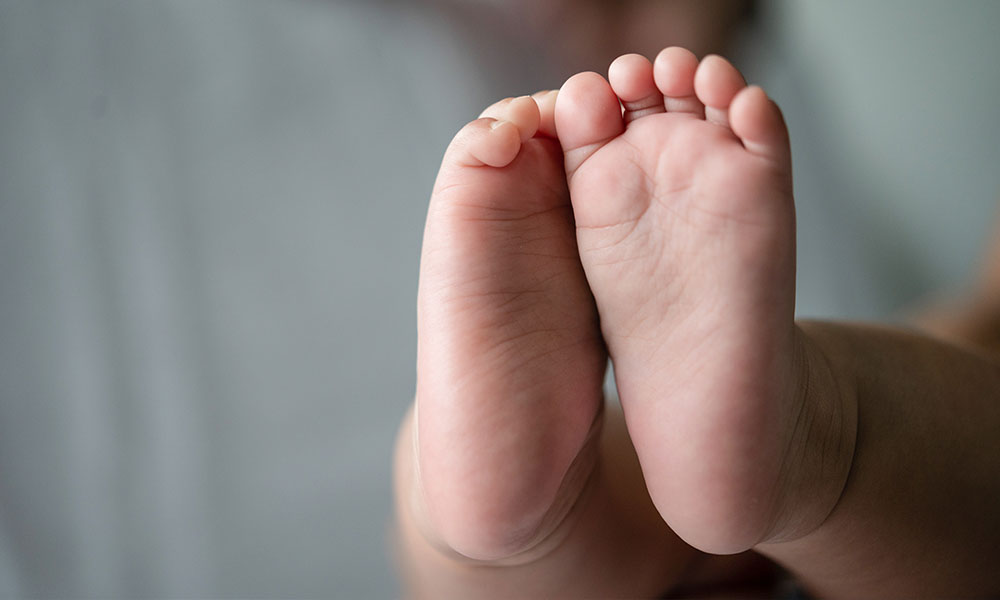
A club foot (also called “Clubfeet”) refers to a condition in which a newborn’s foot or feet appear to be rotated internally at the ankle. The foot points down and inwards, and the soles of the feet face each other. The reason for the feet’s bent appearance is that the Achilles tendon (muscle) at the back of the ankle is too short, causing the foot to be pulled. In medical terms it is known as talipes equinovarus (TEV) or congenital talipes equinovarus (CTEV).
Diagnosis and treatment
In our experience and according to medical advice, a club foot is a birth defect in which the foot is twisted out of shape or position. The cause of short tendons and clubfoot is largely unknown and babies with clubfoot are usually otherwise healthy. This shortened tendon is not something that can be caused by a drip or treatment, a person is born with this.
Despite its appearance, clubfoot itself doesn’t cause any discomfort or pain. Orthopaedic Surgeons are the specialists who deal with these types of issues and will together with occupational therapists, physiotherapists and podiatrists advise the patient and the family on the best way to gain better function of the foot. Treatment is usually successful and includes stretching and casting or stretching and taping. Often, surgery is required to help release the muscles at the back of the leg and ankle so that the foot can relax and move into a normal position. These operations may leave scars, however the scars should not interfere with the normal functioning of the foot.
Other causes of deformities
In cases where a foot disfigurement was caused by a drip, cast or other treatment, it would be necessary to investigate the care and see whether this could have been prevented. If congenital (genetic) causes cannot be identified, the reason for the disfigurement could be due to a medical mistake and common examples are:
- A malfunctioning drip: where the fluid doesn’t go into the vein or the needle causes damage to the skin,
- A plaster cast that was applied to tightly or a poorly performed procedure: this can cause skin and muscles to turn dark, develop gangrene and die due to deprivation of oxygen or blood. This is often referred to as compartment syndrome.
As attorneys we have dealt with numerous cases where drips or plaster casts have resulted in disfigurements or amputations.
Conclusion
As in most medical cases, the answer would depend on each person’s medical history and circumstances.
One of the biggest indicators on whether there could be a claim for medical negligence would be the diagnosis and report by a specialist such as an Orthopaedic Surgeon. Identifying an incident such as an incorrectly applied cast or drip could be an indication of a cause. In cases where there is an obvious reason, such as a muscle or tendon being too short, it would show to the patient that this was present and birth already and was not caused by treatment.
If you have any questions or suspect that you or your child’s injury or disability is the result of a medical mistake, please feel free to contact us at Paul du Plessis Attorneys or visit www.pauldup.co.za.
For more information you can visit these resources:
https://orthoinfo.aaos.org/en/diseases–conditions/clubfoot/
https://www.webmd.com/a-to-z-guides/what-is-clubfoot
https://www.hopkinsmedicine.org/health/conditions-and-diseases/clubfoot